
Field Note #37: AI-Written Safety Programs and the Liability Problem
Why well-written policies can still fail OSHA’s “good faith” test

If you run a pet sitting or dog walking company, you already know the challenge. Safety training takes time. Writing policies takes time. Ever fed a safety policy into ChatGPT and gotten back a 20-page manual that sounds professional… but your team would never actually follow?
That pressure is exactly why many owners are experimenting with AI tools and large language models to generate safety programs.
But there is a growing danger hiding inside that shortcut.
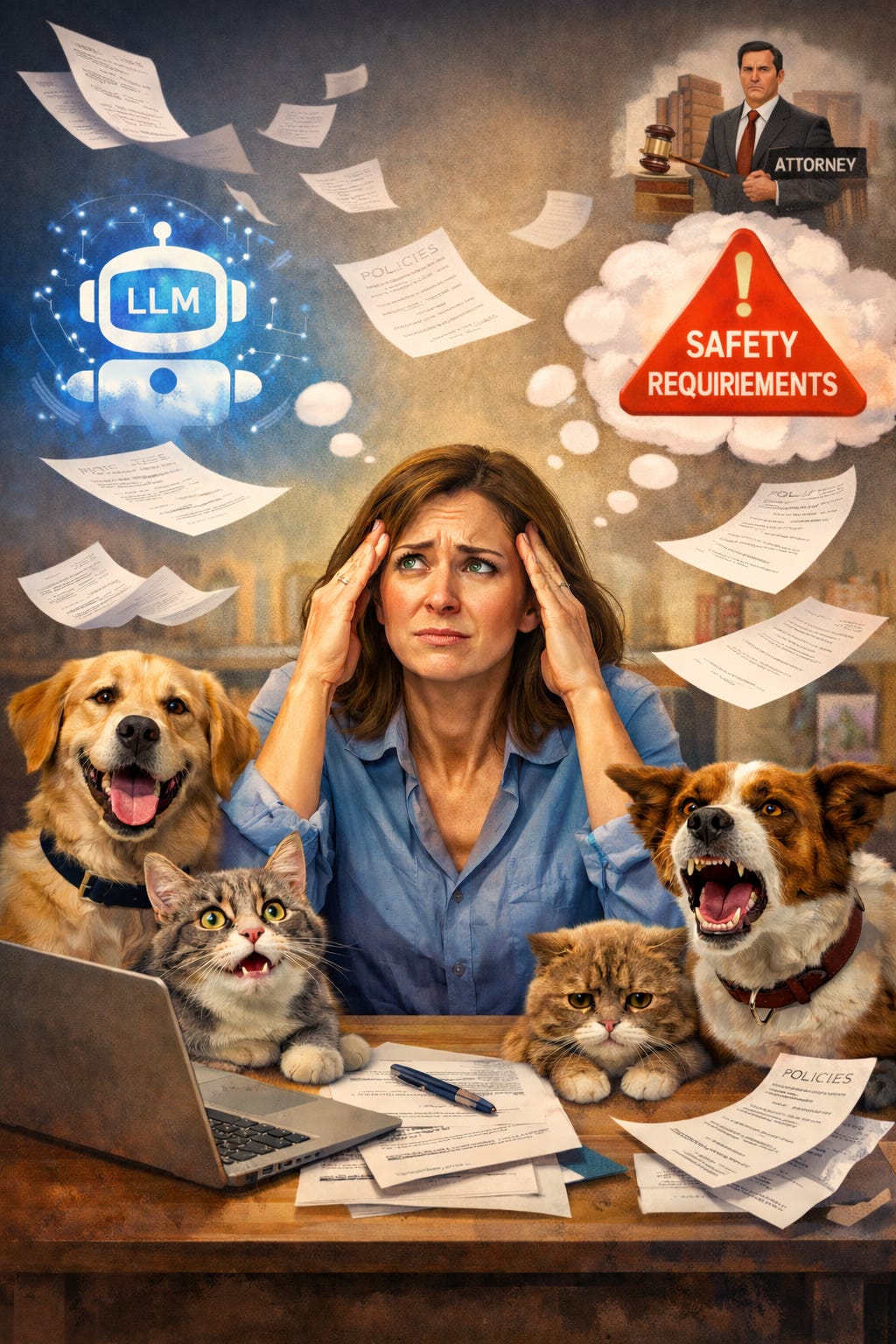
When an LLM substitutes for the safety professional, the business owner is exposed to two risks at the same time. The program may be too weak to demonstrate “good faith” compliance if an incident occurs and an inspector arrives. Or the opposite happens: the AI produces policies and procedures the owner never intended to implement, quietly creating obligations the company cannot realistically meet.
“Good faith” isn’t about perfect paperwork. It’s about showing you recognized hazards and took reasonable steps to control them.
In some cases, the document may even look impressive enough that an attorney tells you it is well written. That assessment may be correct from a legal standpoint. But safety programs are not only legal documents. They are operational systems. A safety professional evaluates whether the policies match the hazards and realities of the work being done.
The problem is that safety programs are not judged by how they read. They are judged by how they operate.
There is a simple enforcement reality behind that distinction: if it’s written in your safety program, OSHA expects you to be doing it.
That is where AI-generated safety programs can quietly create risk. A language model may draft policies, procedures, and commitments that sound thorough and responsible. But if those procedures are not actually implemented, trained, and followed by your team, the document becomes evidence of a gap rather than proof of compliance.
A language model can generate text. It cannot recognize hazards, verify implementation, or manage accountability inside a workplace. That responsibility still belongs to the employer.
An underbuilt safety program and an overbuilt program both create regulatory exposure. ⚖️
Legal review asks: Is this language defensible?
Safety leadership asks: Can this actually be done in the field?
Those two questions overlap, but they are not the same. And that difference is where many AI-generated safety programs begin to break down. 🧭
Understanding the Role of Best Practices
For pet sitters and dog walkers, “best practices” can sound like polite suggestions. In the safety world, they carry more weight than that.
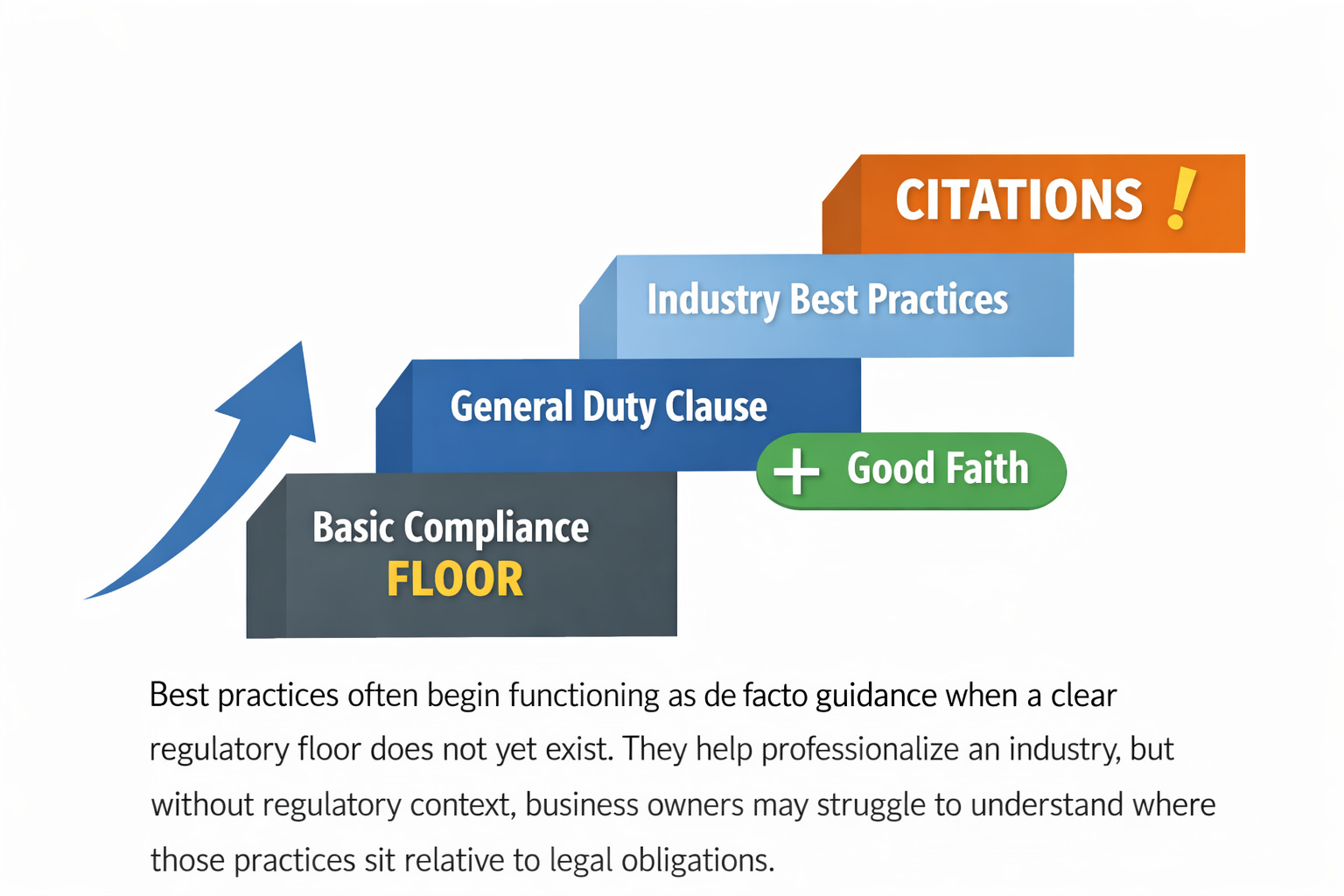
OSHA regulations are the legal floor. They are the specific rules written into federal law. But many hazards in our field are not covered by detailed OSHA standards. There is no federal rulebook written specifically for dog bites, reactive animals, icy walkways, or entering private homes alone.
That is where the General Duty Clause comes in. Under the Occupational Safety and Health Act, employers must provide a workplace free from recognized hazards that could cause serious harm.
A hazard becomes recognized when an industry understands the risk and how it should be managed. OSHA often demonstrates this by looking at best practices. These may include professional organization guidance, industry training materials, manufacturer instructions, or widely accepted safety procedures.
So while best practices are not regulations themselves, they can become evidence that a hazard was known and that reasonable controls existed.
For pet sitters and dog walkers, industry guidance often references frameworks such as Pet Sitters International’s Global Standards for Professional Pet-Sitting & Dog-Walking Businesses (2025), NAPPS, PPG, or Fear Free. These outline baseline expectations like pet first aid and CPR certification, safe animal handling protocols, written emergency and bite-response plans, behavioral risk screening, lone-worker safety measures, and injury reporting.
These are not regulations in the same sense as OSHA standards. They function more like consensus guidance. But when widely accepted in an industry, they help demonstrate that foreseeable hazards were understood and that reasonable controls were available.
Many industries rely on consensus standards developed by organizations such as ANSI/ASSP, ISO, NFPA, and others to guide how workplace hazards are managed. These standards are not laws on their own, but they often become deeply embedded in the regulatory system.
American Society of Safety Professionals also states that government agencies should make use of these voluntary standards:
Government agencies such as OSHA should be encouraged to utilize consensus standards as an efficient alternative to traditional rulemaking.
Dog bites are a simple example. Most professional pet care organizations acknowledge them as a foreseeable hazard in this work. Training on animal body language, screening new clients, and having a bite response protocol are widely recognized practices. If a company ignores those controls entirely, OSHA could argue the employer failed to address a known hazard.
AI-generated safety programs can complicate this picture.
A language model often pulls language from many industries at once. For example, an LLM might insert policies requiring chemical storage cabinets, lockout procedures, or extensive hazard labeling programs because those are common safety practices in other workplaces. A small pet sitting company may not store chemicals, operate machinery, or maintain a facility where those requirements even apply.
But once that language appears in your written safety program, it becomes an expectation.
This is why written safety programs must be realistic. If your policies promise training, incident reporting, or hazard controls, inspectors will expect those things to actually happen.
A strong safety program is not about impressive paperwork. It is about aligning written policies with the real hazards your team faces and the practices you are prepared to carry out every day. 🐾
Templates
Templates can be useful starting points. They provide structure and help business owners think through hazards they may not have formally documented before.
But a template is not a finished safety program.
Every pet sitting company operates differently. Some only perform cat visits in private homes. Others walk multiple dogs in busy neighborhoods, drive between clients all day, or manage teams entering unfamiliar properties. The hazards and controls will not look exactly the same in each case.
Like AI-generated content, templates must be reviewed and adapted. Remove what does not apply. Adjust policies so they match how your company actually operates. If a procedure is written into the program, your team should be able to demonstrate how it is carried out.
The responsibility for deciding what belongs in the program still rests with the employer.
The Fractional Safety Officer 🧭
Many pet sitting and dog walking companies are too small to hire a full-time safety professional. Yet the hazards of the work are real: animal bites, driving risks, slips and falls, working alone in unfamiliar homes, chemical exposure, and emergency response when something goes wrong.
That gap often leaves owners trying to build safety programs alone using templates, AI tools, or borrowed policies from other industries.
A fractional safety officer or competent person fills the space between do-it-yourself and hiring a full-time specialist.
*A competent person is someone capable of identifying hazards in the workplace and authorized to take prompt action to correct them.
In this model, a safety professional works with a company on a part-time or advisory basis. They help translate regulations into practical policies, review templates so they match the real work being done, and guide owners on implementing training and incident reporting that actually functions in the field.
The goal is not to hand a business a thick manual and disappear. The goal is to make sure the program reflects the real hazards of the work and that the owner understands what each policy requires in practice.
Technology can help draft the document.
A safety professional helps ensure that document reflects a workplace that actually exists. 🐾
Reflection Questions:
If you reviewed your safety program today, how much of it reflects policies your team is actually trained to follow in the field?
Have you reviewed any AI-generated or template language to confirm it actually applies to the way your pet sitting business operates?
Could your team demonstrate the safety procedures written in your program if an incident occurred tomorrow?
What hazards are most common in your daily work with pets, homes, and travel, and are those hazards clearly addressed in your current policies?
If an inspector asked how your safety program is implemented, what evidence could you show beyond the written document?
¹ The American Society of Safety Professionals (ASSP) has noted that government agencies such as OSHA should be encouraged to utilize voluntary consensus standards as an efficient alternative to traditional rulemaking. See: ASSP regulatory comments on consensus standards, available at assp.org